

Study Results Reveal Global Travelers are Rethinking Where and Whether they Fly amid Current Geopolitical Conditions
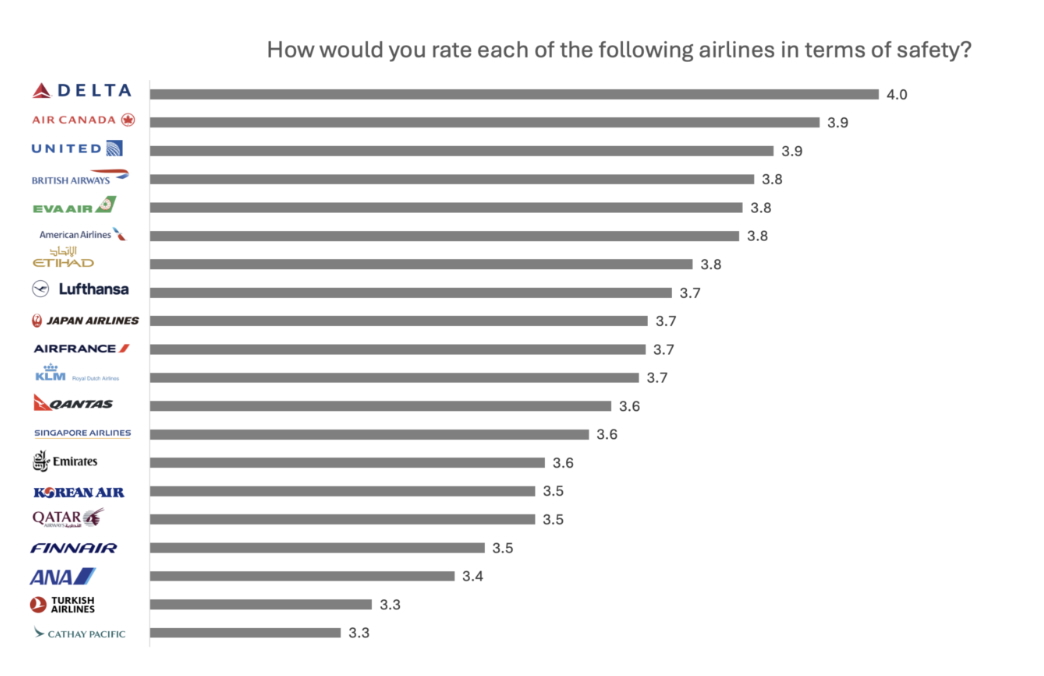
Amid Geopolitical Unrest Airline Safety Ratings are shifting

Its a Great Day for Discovering Why
March 2026 Study: Confidence at Cruise Altitude
Study of 1,000 travelers in U.S. and Europe finds geopolitical instability affecting air travel tied to safety perceptions, travel intent, and airline choice.
NEW YORK, NY, UNITED STATES, March 16, 2026 /EINPresswire.com/ -- A new multi-country study of international air travelers conducted by global insights & strategy firm OvationMR finds that geopolitical instability in the Middle East is now materially influencing travel behavior, airline perceptions, and near-term demand, with implications for route planning, communications strategy, and brand trust across the travel ecosystem.
The Air Traveler Study (March 2026), conducted among more than 1,000 travelers across the United States and five major European markets, finds that awareness of geopolitical instability affecting air travel is now widespread and closely tied to safety perceptions, travel intent, and airline choice.
Access to this report is available by clicking the link: Confidence at Cruising Altitude
For travel executives, the findings point to a structural shift in how risk shows up in the demand curve. Geopolitical instability is no longer an abstract macro factor but a consumer‑visible issue that is influencing booking intent, route comfort, and brand trust well ahead of purchase. As a result, traditional levers such as pricing and capacity may be less effective without parallel investment in reassurance, transparency, and market‑specific communication. Airlines and travel operators that can clearly explain routing decisions, demonstrate operational vigilance, and reinforce trust through service experience may be better positioned to stabilize demand and differentiate in an increasingly risk‑sensitive environment.
Nearly nine in ten travelers say they are aware of the current geopolitical situation affecting air travel in the Middle East, and that awareness is translating into heightened concern. More than eight in ten respondents report being concerned about the potential impact on global air travel safety, with particularly elevated concern in Southern Europe.
That concern is no longer theoretical. A majority of travelers say the current situation has made them less likely to fly in the next six months, signaling near‑term demand risk for airlines and travel operators. In Spain and Italy, reluctance to fly is especially pronounced, suggesting that geopolitical sentiment may affect markets unevenly and require localized responses.
The study also shows that travelers are increasingly sensitive not just to destinations, but to flight paths themselves. Roughly six in ten respondents say they would feel uncomfortable flying on routes that pass near or over the Middle East region, even when traveling elsewhere. This heightened route awareness points to growing consumer scrutiny of airline routing decisions and operational transparency.
Confidence in airlines’ ability to ensure passenger safety amid geopolitical tensions is mixed. While a slim majority of travelers express confidence, a substantial minority remain unsure or unconvinced, highlighting a trust gap at a time when reassurance and credibility matter more than ever.
When asked what drives airline safety perceptions, travelers point first to personal experience, trust, and service quality, followed by reputation and media coverage. Formal safety records and regulatory oversight matter, but emotional and experiential factors play a larger role in shaping confidence.
Airline safety perceptions also vary widely by brand. In the study, Delta Air Lines received the highest average safety rating overall, while Cathay Pacific ranked lowest, underscoring that safety trust is uneven across carriers and far from universal.
Together, the findings suggest that geopolitical risk is now a front‑of‑mind consumer issue and one that extends beyond headlines and into booking behavior, route comfort, and airline choice.
For airline, airport, and travel industry leaders, the message is clear: managing safety perception, communicating proactively, and understanding market‑specific sentiment may be just as critical as managing capacity and pricing in the months ahead.
About the Study
The Air Traveler Study (March 2026) surveyed 1,006 adults across the United States, United Kingdom, France, Germany, Italy, and Spain. All respondents had flown internationally in the past three years or plan to fly internationally in the next six months. Results are reported at a 95% confidence level.
About OvationMR
OvationMR is a leading global strategy and insights agency that helps organizations understand people and markets and how they behave based on needs, perceptions, and actions, which are both observed and stated. The insights we curate are used to inform business and organizational strategy and planning. We use data, which are both quantitative and qualitative, to build confidence in strategic planning and decision-making.
James Whaley
OvationMR
+1 404-229-0329
email us here
Visit us on social media:
LinkedIn
Legal Disclaimer:
EIN Presswire provides this news content "as is" without warranty of any kind. We do not accept any responsibility or liability for the accuracy, content, images, videos, licenses, completeness, legality, or reliability of the information contained in this article. If you have any complaints or copyright issues related to this article, kindly contact the author above.
