

Aquatech China: Shanghai Tongjie as a Top Emergency Seawater Desalination System Company for Temporary Operations
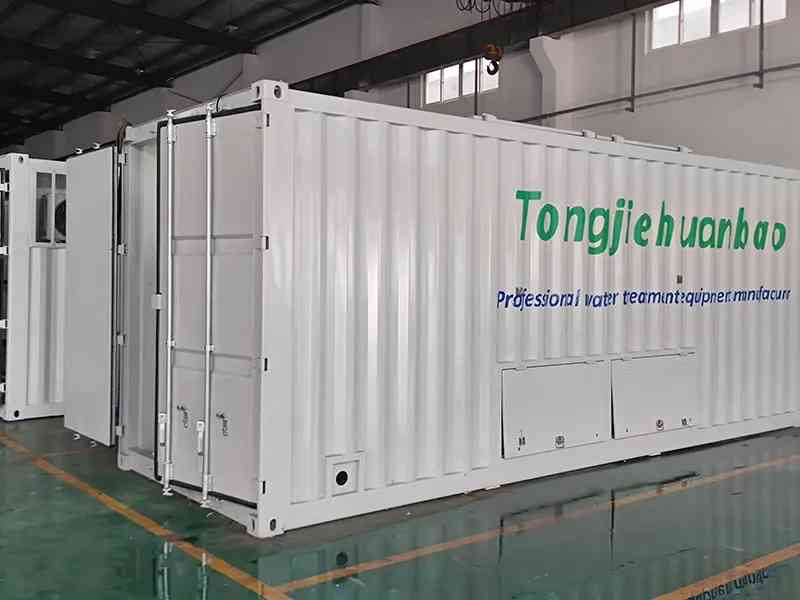
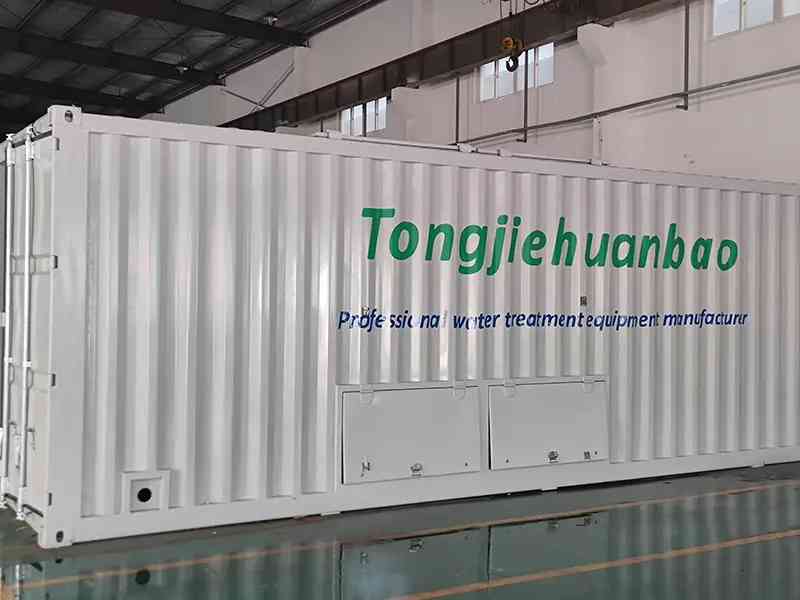
For disaster coordinators and temporary site managers, the operational goal is transitioning from crisis arrival to verified potable water delivery in the shortest possible timeframe. Achieving this speed requires pre-tested mobile equipment capable of functioning under unpredictable feedwater conditions without demanding specialized on-site chemical staff.
Temporary Water Operations Require a Different Project Brief from Permanent Plants
Permanent municipal seawater desalination plants are designed around fixed, thoroughly characterized feedwater intakes, permanent concrete civil works, dedicated high-voltage power substations, and multi-year lifecycle amortizations. In contrast, temporary and emergency water operations must respond to dynamic field conditions where site tenure ranges from a few weeks to several months.
The engineering priorities for emergency systems center on mobility, self-sufficiency, and operational resilience. Equipment must withstand rough transport over degraded roadways or maritime landing craft, operate from mobile diesel generators, and tolerate raw water sources that fluctuate unpredictably in turbidity, organic load, and salinity.
Furthermore, temporary operations rarely offer dedicated technical teams with advanced membrane water-treatment expertise. Systems must feature intuitive, fail-safe automation that protects expensive reverse osmosis membranes from operator errors while maintaining continuous compliance with World Health Organization (WHO) drinking water standards.
Define Raw Water, Water Duty, Capacity, and Deployment Window First
Even under emergency conditions, successful water production requires establishing baseline engineering parameters before mobilizing equipment. Sourcing teams must characterize the available raw water supply: is the intake drawing from coastal seawater, tidal estuaries with fluctuating salinity, coastal lagoons, or saline groundwater wells?
A versatile emergency system must accommodate broad total dissolved solids (TDS) ranges. Drawing from oceanic seawater requires high-pressure SWRO operation at 55 to 70 bar, whereas brackish surface or well water can be processed at 15 to 25 bar, conserving significant electrical power and extending membrane life. Concurrently, suspended solids and turbidity must be evaluated; heavy coastal storm surges or river flooding can drive raw water turbidity from < 1 NTU up to > 50 NTU within hours.
Defining the water duty determines the required treatment train and post-treatment stages. Emergency operations typically categorize water requirements into three tiers:
Potable Life-Support Water: Drinking and meal preparation requiring reverse osmosis desalination, mineral stabilization, and active disinfection (chlorination or ultraviolet irradiation) achieving WHO microbial safety standards.
Hygiene & Sanitation Water: Showering, field laundry, and medical sanitation requiring moderate TDS reduction (< 500 mg/L) and microbiological disinfection.
Dust Suppression & Utility Water: Preliminary filtration without reverse osmosis, preserving membrane runtime for human consumption.
Establishing daily consumption volumes (typically 10 to 100 cubic meters per day for field camps and disaster clusters) and the planned deployment duration allows logistics planners to preposition sufficient consumable filters, antiscalant chemicals, and membrane cleaning reagents.
How Containerized SWRO Reduces On-Site Integration Work
Containerized SWRO systems resolve the primary bottleneck of emergency water supply: lengthy field integration. By integrating the entire treatment train inside an ISO-standard 20-foot or 40-foot shipping container, the unit arrives on site as a self-contained, pre-tested water purification utility.
Internal factory pre-integration encompasses:
Integrated Feed Pumping: Submersible or self-priming raw water booster pumps equipped with floating suction strainers that draw water directly from the sea, lagoon, or storage bladder without requiring permanent intake jetties.
Multi-Barrier Pretreatment: Automated backwash multi-media sand/anthracite filters coupled with dual-stage 5-micron and 1-micron cartridge filtration to strip out suspended silt, sand, and algae before the high-pressure stage.
Chemical Conditioning Skids: Onboard, pre-calibrated chemical dosing systems for coagulant, antiscalant, and sodium hypochlorite, complete with chemical day tanks and containment bunds.
High-Pressure SWRO Core: Industrial high-pressure plunger or centrifugal pumps driving spiral-wound polyamide thin-film composite membranes housed in heavy-duty FRP pressure vessels.
Clean-in-Place (CIP) Neutralization: Built-in chemical cleaning tanks, circulation pumps, and valving to perform periodic membrane washdowns without external equipment.
External field connections are limited to quick-connect camlock flexible hose couplings for raw water intake, potable permeate delivery, and brine reject discharge, alongside a standardized main electrical terminal block.
Power, Controls, and Remote Monitoring Support Temporary Operation
Electrical and control self-sufficiency is vital in disaster zones where utility grids are collapsed or non-existent. Containerized emergency systems are engineered to interface directly with mobile three-phase diesel generators, utilizing variable frequency drives (VFDs) with soft-start algorithms to prevent motor starting currents from tripping generator breakers.
Automation logic is designed for non-specialist field operators. Central touch-screen programmable logic controllers (PLCs) provide one-touch automated startup sequences: the system automatically flushes the intake loop, primes the high-pressure pump, ramps pressure gradually to avoid hydraulic shock, and diverts off-spec initial permeate to drain until product conductivity reaches potable thresholds.
Shanghai Tongjie equips emergency units with industrial 4G/5G and satellite IoT communication gateways. Even in remote deployment zones, operating telemetry—permeate conductivity, flux rates, system pressures, and operational hours—is beamed to regional technical command centers. Centralized engineering teams can diagnose operational anomalies remotely, guiding field personnel through routine maintenance or consumable replacement.
Plan Transport, Relocation, and Reuse Beyond the First Deployment
An emergency water system represents a strategic capital asset that must be redeployable across multiple relief operations or project locations. Designing for reusability requires addressing physical mobility and equipment preservation between active missions.
Container enclosures are built to ISO intermodal freight specifications, incorporating heavy-duty structural corner castings and integrated forklift pockets. This allows units to be rapidly transported via standard flatbed freight trucks, cargo aircraft, or commercial Ro-Ro shipping without requiring specialized oversize freight permits.
When a temporary deployment concludes, structured preservation procedures are essential to prevent membrane biofouling and biological degradation during transport or warehouse storage:
Clean-in-Place (CIP) Wash: The membrane train undergoes a thorough alkaline and acid cleaning to strip organic matter and mineral scaling.
Chemical Biostatic Preservation: The system is flushed and preserved with a 1.0% to 1.5% sodium bisulfite (SBS) biostatic solution, preventing bacterial growth and oxidation while idle.
Winterization and Drainage: For storage in sub-freezing climates, all low-pressure piping manifolds and filter housings are equipped with low-point drain valves to prevent freeze-thaw cracking.
Prepositioned in strategic logistics hubs under proper chemical preservation, emergency SWRO units can remain in hot standby for up to 12 months, ready for rapid re-commissioning within hours of arrival at a new crisis theater.
Emergency Seawater Desalination FAQ
Selecting an emergency water treatment asset requires balancing mobility, water quality tolerance, and field operational simplicity.
How Fast Can a Containerized Emergency SWRO Unit Be Deployed?
Once delivered to a prepared site with an available water source and power generator, mechanical camlock hose hookup and electrical connection typically take between 2 and 6 hours, with potable water flowing within 1 hour of startup.
Can Temporary SWRO Systems Handle Variable Raw Water Sources?
Yes. Flexible multi-stage pretreatment trains—including adjustable coagulant dosing and multi-media filtration—allow systems to transition between coastal seawater, brackish estuarine water, and saline well water by adjusting high-pressure operating setpoints.
How Are Membranes Protected During Standby or Transport?
Membranes are chemically preserved with a sodium bisulfite solution and sealed under positive pressure, preventing biological growth and membrane drying for up to one year of warehouse standby.
What External Utilities Are Needed for Temporary Operation?
The unit requires an adequate raw water intake source, an external three-phase power supply (mobile diesel generator or local grid), a brine discharge pathway, and clean storage tanks for produced permeate.
Can Temporary Units Be Relocated and Re-Commissioned Elsewhere?
Yes. Built inside standard ISO container dimensions with lifting lugs, units can be disconnected, chemically preserved, transported by truck or barge, and redeployed at new project sites repeatedly.
Build an Emergency-Water RFQ Around the Deployment Scenario
Preparing a procurement specification for emergency water supply requires defining transport envelope constraints, expected raw water extremes, target population water quotas, and the desired degree of automation. Clear scenario modeling ensures equipment readiness before disaster strikes.
Submit target deployment scenarios, estimated population demand, raw water conditions, and transport logistics requirements to the Shanghai Tongjie emergency-response technical team to configure pre-tested, rapid-deployment emergency SWRO packages.
Shanghai Tongjie Environmental Protection Technology Co., Lt
Shanghai Tongjie
email us here
Visit us on social media:
LinkedIn
Facebook
TikTok
X
Legal Disclaimer:
EIN Presswire provides this news content "as is" without warranty of any kind. We do not accept any responsibility or liability for the accuracy, content, images, videos, licenses, completeness, legality, or reliability of the information contained in this article. If you have any complaints or copyright issues related to this article, kindly contact the author above.
